10 Things To Know Before Buying A Catamaran
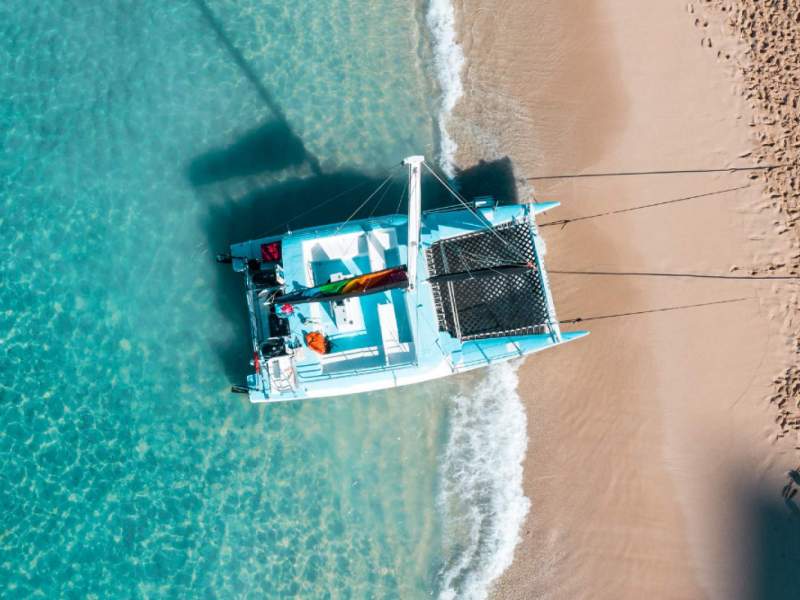
Catamarans are one of the fastest growing categories in the Australian boat market, and it's easy to see why. Twin hulls mean more stability at anchor, more living space than a monohull of the same length, and, in a sailing cat, a shallow draft that opens up water a deep-keeled boat could never reach. But a catamaran has a different checklist than a monohull of things to look for, questions to ask and traps to avoid. Whether you're eyeing a sailing catamaran for coastal cruising or a power cat for day trips and fishing, here's what you need to know before you sign anything.
Buying a catamaran comes down to ten key considerations: understanding the difference between sail and power cats, budgeting realistically for the purchase price and ongoing costs, checking licence requirements, inspecting the hulls and structure carefully, factoring in marina and haul-out costs (which are almost always higher for multihulls), understanding bridgedeck clearance, weighing up the maintenance demands of two engines and two of almost everything else, considering resale value, checking for money owing via the PPSR, and getting a proper pre-purchase survey before you commit. Getting these right before you buy will save you money, time, and a fair few headaches once you're actually on the water.
1. Sailing catamarans and power catamarans are built for different purposes
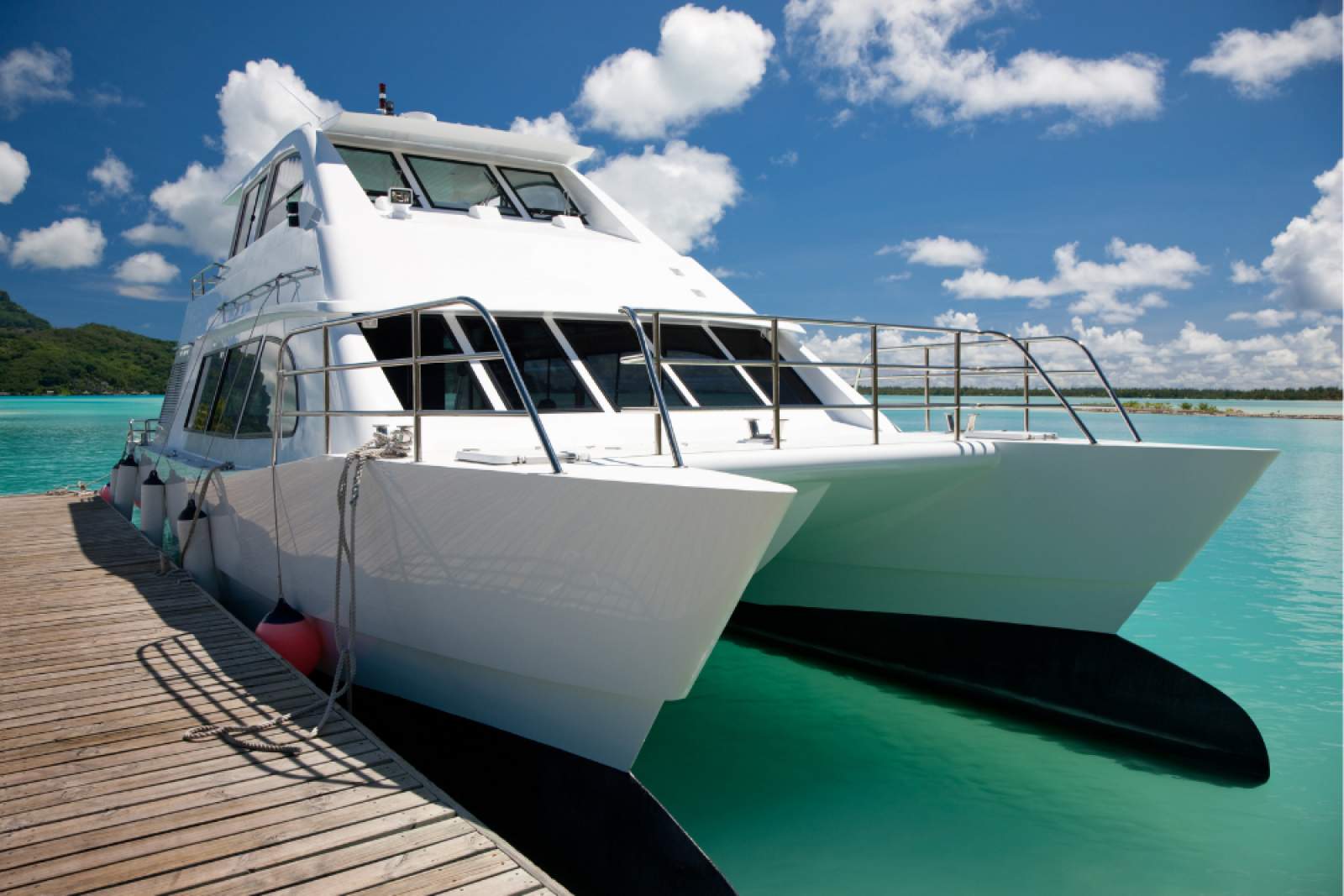
A sailing catamaran uses two hulls connected by a bridgedeck, with a mast and rig providing the primary means of propulsion and one or two auxiliary engines for manoeuvring and calm-weather cruising. A power catamaran drops the rig entirely and relies on twin outboards, inboards or diesel engines for speed and range. Sailing cats suit owners planning longer coastal or offshore passages who want fuel efficiency and the option to sail. Power cats suit those who want speed, simplicity and a stable, spacious platform for day trips, fishing or short coastal runs without the complexity of sail handling. Deciding which category you're after early on will narrow your search considerably, since the two types are built, priced and maintained quite differently.
2. Catamaran prices vary widely across the Australian market
Catamaran prices vary enormously depending on size, age, condition, brand and whether you're buying sail or power. A small, older trailerable power cat can sell for a fraction of what a late-model, offshore-capable sailing catamaran from a well-regarded builder will cost. As a general rule, catamarans tend to command a higher price than a monohull or a similarly sized power boat of comparable age and condition, largely because of the extra hull, extra systems and extra interior volume involved in building one. Beyond the purchase price, budget for ongoing costs that are typically higher for multihulls: marina berthing, hardstand and haul-out fees, insurance, and maintenance on two engines instead of one. It's worth pricing out a realistic annual running cost before you commit to a size and category, rather than focusing on the purchase price alone.
3. Licence requirements depend on your state, not the number of hulls
In most cases, a catamaran is licensed the same way as any other recreational vessel of a similar size, and the licence you need depends on the state or territory you're boating in rather than the number of hulls. Some states apply additional requirements once a vessel passes a certain length or if it's used commercially, such as for charter. If you're planning to skipper a larger sailing catamaran offshore, it's also worth looking into recognised sailing competency courses, even where they're not legally required, since handling a multihull under sail does differ from handling a monohull. Check the licensing rules for your state before you buy, particularly if you're planning to operate the boat in more than one jurisdiction.
4. The hulls and structure need a thorough inspection
Because a catamaran has two hulls and a bridgedeck joining them, there's simply more structure to check than on a monohull. Look closely at both hulls for signs of osmosis (small blisters in the gelcoat), delamination, or repaired impact damage, particularly around the bows and skegs. Check the join between the hulls and the bridgedeck for any signs of stress cracking, which can indicate the structure has been worked hard in a seaway. On sailing cats, inspect the saildrives or shaft seals, rudders and steering linkages on both hulls, since problems are often isolated to just one side and easy to miss if you only check one. On power cats, check both engines, both drive legs or outdrives, and confirm they've had comparable maintenance and hours, since a mismatched pair of engines can be a costly problem down the track.
5. Berthing and storage usually cost more than for a monohull
Marina berths are usually priced by beam as well as length, and a catamaran's beam is typically far wider than a monohull of the same length, since the whole point of the design is the extra width between the hulls. That means catamaran owners often pay a premium for marina berthing, and not every marina has berths wide enough to accommodate a cat at all. Haul-out and hardstand fees can also be higher, since travel lifts need to be wide enough to straddle both hulls and not every boatyard is set up for it. Before you buy, it's worth confirming that marinas and haul-out facilities in the areas you plan to use are actually able to accommodate the boat's beam, rather than assuming a berth will be available.
6. Bridgedeck clearance affects comfort and structural stress
Bridgedeck clearance is the gap between the underside of the bridgedeck (the structure joining the two hulls) and the waterline. If that clearance is too low, waves will slap against the underside of the bridgedeck in a seaway, creating noise, vibration and, over time, additional structural stress. Boats with generous bridgedeck clearance tend to ride more comfortably offshore, while boats with lower clearance can feel harsher in a chop even though they may be more spacious inside. If you're planning any offshore or open-water passages, ask about bridgedeck clearance specifically and, where possible, try to experience the boat in some chop before you buy rather than relying on a calm-day test run alone.
7. Maintenance is generally more involved than on a monohull
A catamaran typically has two engines, two saildrives or outdrives, two sets of through-hull fittings, and often duplicated systems for steering, electrics and plumbing. That doesn't necessarily mean double the maintenance cost across the board, but it does mean more components to service, more things that can eventually need replacing, and more places for a fault to hide. On the upside, having two engines gives you built-in redundancy if one fails, which is a clear safety advantage that many monohull owners don't have. When budgeting for ownership, factor in servicing costs for two engines rather than one, and ask any seller for maintenance records covering both sides of the boat, not just a general summary.
8. Resale value depends heavily on brand and condition
Demand for catamarans in Australia has grown steadily over recent years, particularly for sailing cats suited to coastal cruising and liveaboard use. Well-known, well-maintained brands with a track record for build quality and structural reliability tend to hold their value better than lesser-known imports, and boats with clear service history, up-to-date rigging and recent antifoul typically sell faster and closer to asking price. If resale value matters to you, it's worth researching how a particular make and model has historically performed on the used market before you buy, rather than assuming all catamarans will hold value equally.
9. Always check for money owing before you buy
Before you hand over a deposit on any boat, including a catamaran, it's worth running a check through the Personal Property Securities Register (PPSR) to confirm there's no money still owing against the vessel. If a seller has an outstanding loan secured against the boat and you buy it without checking, the lender can, in some circumstances, repossess the boat even after you've paid for it in full. A PPSR search is inexpensive and takes only a few minutes, and it's a simple step that protects a purchase that will otherwise represent a significant investment.
10. A Pre-Purchase Survey Is Worth the Cost
For a catamaran, a professional pre-purchase survey is worth every dollar. Given the additional structure, systems and engines involved, an independent marine surveyor can identify issues that are easy to miss on a walk-through inspection, particularly hidden hull damage, osmosis, or corrosion in hard-to-reach areas around the bridgedeck and engine bays. Where possible, arrange for the boat to be hauled out of the water as part of the survey, and consider a separate engine survey for both engines if you're buying a power cat or a cat with twin auxiliary motors. The cost of a proper survey is small compared to the cost of discovering a major structural or mechanical problem after settlement.
Ready to Start Looking?
Buying a catamaran is a bigger decision than buying a standard monohull or trailer boat, simply because there's more boat, more systems and more questions to work through before you commit. Take your time with the inspection, get a proper survey, and make sure the running costs stack up alongside the purchase price. When you're ready to see what's currently available, you can browse new and used sail catamarans or power multihulls for sale across Australia and compare listings side by side to find the boat that actually suits how you plan to use it.
Frequently Asked Questions
What size catamaran do I need for coastal cruising in Australia?
There's no single right answer, but many Australian coastal cruisers look at catamarans in the 38 to 45 foot range, since this size typically offers enough living space and payload capacity for extended cruising while still being manageable for a couple to handle without a full crew. Smaller cats in the low 30s can still cruise comfortably for shorter coastal hops, while cats over 45 feet generally suit owners planning longer offshore passages or chartering. Your ideal size ultimately depends on how many people will be aboard, how far you plan to travel, and your budget for both purchase and ongoing running costs.
Are catamarans safer than monohulls?
Catamarans and monohulls each have different safety characteristics rather than one being universally safer. A well-designed catamaran is very difficult to sink outright thanks to its buoyant twin-hull construction and generally offers greater initial stability, meaning it's less prone to heeling over at anchor or under sail. However, catamarans can be more difficult to right if they do capsize in extreme conditions, which is rare but is a known risk with the design. Monohulls, by contrast, are self-righting due to their ballasted keel. In practical terms, for typical Australian coastal and offshore conditions, both boat types can be operated safely when properly maintained, well-equipped, and skippered within their limits.
How long do catamaran hulls typically last?
A well-built fibreglass catamaran hull, properly maintained and stored, can reasonably be expected to last several decades, with many boats still sailing or cruising well past the 30 year mark. Longevity depends heavily on build quality, how the boat has been used and stored, and whether issues like osmosis or structural stress cracking were caught and repaired early. This is exactly why a thorough hull inspection and, ideally, a professional survey matter so much when buying a used catamaran, since the hull's condition tells you far more about its remaining lifespan than its age alone.
Can beginners sail or skipper a catamaran?
Yes, catamarans are often considered approachable for newer sailors thanks to their stability and the fact that they don't heel over the way a monohull does, which many beginners find reassuring. That said, catamarans handle differently under sail and in tight marina manoeuvres due to their width and twin-engine steering, so it's worth spending time with an experienced catamaran skipper or completing a recognised competency course before heading out on your own, particularly for larger sailing cats or offshore passages.