Electric Outboards Reach A Tipping Point For Australian Small-craft Use
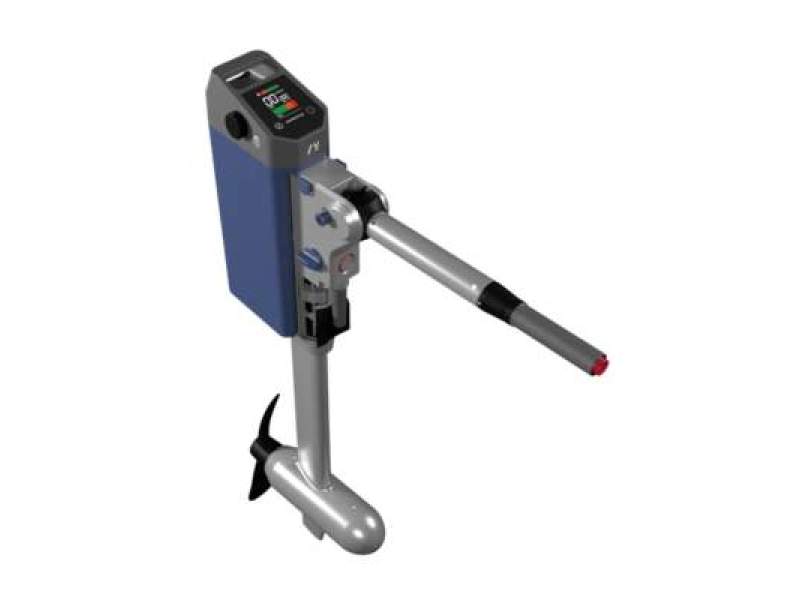
The 3hp-equivalent class has matured to the point where electric is a practical default for tenders, tinnies, and inflatables, with caveats worth understanding before you commit.
Small electric outboards have been promising a lot for several years. In 2026, the best of them are finally delivering, with enough track record to assess honestly, and enough real-world use to know where the limitations still bite.
The E-Propulsion Spirit 1.0 Plus and the Momentum U2 are the current standouts in the 3hp-equivalent class, the segment most relevant to Australian boaters running tenders to moored vessels, aluminium tinnies in estuary systems, and inflatables for waterfront access. Both have moved past the early-adopter phase. Both reward the boater who understands what they are and what they are not.
Why the conversation has shifted
The technical case for electric in this class rests on three genuine advantages. Brushless DC motors produce full torque from zero RPM, meaning immediate thrust for manoeuvring off a pontoon or working against tidal current; something a petrol engine climbing through its rev range cannot match. The direct-drive architecture, with the motor housed in the submerged lower unit and no gearbox between motor and propeller, eliminates the main service items of a petrol outboard: no engine oil, no impeller, no spark plugs. And the split-component design (drive unit at approximately 11 kg, battery at approximately 9 kg) makes transom mounting physically manageable for solo boaters in a way a single heavier petrol unit often is not.
The range picture: real numbers, real context
Published range data for the Spirit 1.0 Plus, tested in a 3.1m aluminium RIB, puts full throttle performance at approximately 4 nautical miles at 4.3 knots, and economy mode at approximately 9 nautical miles at 3.0 knots. Those figures are meaningful and they need context.
They were recorded under optimal conditions: flat water, a lightly loaded boat, a new battery at full charge, in moderate temperatures. On Australian waterways the variables that reduce those numbers are common. A fresh breeze and short chop can cut range by 20 to 40 percent. Tidal current adds time and energy draw. A loaded boat drags more. A battery a few years into its life retains less capacity than a new one.
A practical planning rule: take the published economy range and apply a 30 percent reduction for typical conditions. That gives the Spirit 1.0 Plus a working economy range of around 6 nautical miles, more than adequate for most tender and dinghy use, but worth knowing before a longer passage.
The energy gap between lithium-ion batteries and petrol is real and unlikely to close significantly in the near term. A 10 kg lithium battery stores approximately 1.5 kWh; 10 kg of petrol (13 litres) stores around 120 kWh of energy. The electric motor’s efficiency advantage, losing roughly 10 percent in conversion versus petrol’s 75 percent, narrows the gap however the useable energy difference is still significant (1.4 kWh for 10kg of battery versus 32 kWh for petrol). The weight factor penalty of a lithium battery to petrol is currently about 20 to 1.
Throttle management therefore matters much more with an electric outboard than it ever did with petrol.
One factor rarely mentioned in promotional material: lithium-ion battery performance drops noticeably below 10°C. For most Australian coastal and estuarine boating this is a minor consideration, but it is relevant for boaters in southern states during winter, or on alpine freshwater.
The E-Propulsion Spirit 1.0 Plus
The Spirit 1.0 Plus has held its position as the benchmark in the 1kW class long enough that the claim has been tested. Its defining feature is a positively buoyant battery. If the battery is dropped overboard or detaches in rough conditions, it stays at the surface. For solo boaters and those operating away from immediate assistance, this is a failsafe that earns confidence gradually rather than in a single dramatic moment.
The motor is one of the the quietest in the class, using Field-Oriented Control (FOC) to reduce harmonics to a level noticeably lower than competing units. On a still anchorage or in a marine park where noise intrusion matters, the difference is apparent from the first metre of travel.
Where the Spirit 1.0 Plus gives ground is the user interface. The display is functional but basic compared to newer entrants, and the overall experience reflects a product designed first around performance and safety rather than ease of use.
The Momentum U2
The U2 represents a different design philosophy: that the interface between boater and motor matters as much as the motor’s raw capability. Its state of charge monitoring uses active shunt-based sensing rather than the voltage estimation that older units relied on, producing real-time Time-to-Empty figures that update continuously as throttle position changes. On a tidal estuary where the energy equation shifts with every change of current or headwind, this is information that changes how decisions are made on the water.
The transom bracket is reinforced for high-torque stress and repeated mounting cycles, and the integrated display is readable in direct Australian sun, a meaningful practical advantage in conditions where reflective glare makes standard screens difficult to read at a glance.
Momentum vs E-Propulsion
The biggest difference is that the U2 is capable of 2.5kW vs 1.0 kW for the e-propulsion. The U2 has a power limiter for normal use (to conserve battery) but can be quickly disabled if extra power is required.
- If you run the Momentum U2 at wide-open throttle (2.5 kW), you will drain the battery in about 30 to 35 minutes (1.4 kWh NMC battery).
- The ePropulsion Spirit 1.0 Plus has a slightly smaller 1.27 kWh LFP battery, but because its maximum draw is capped at 1.0 kW, it will run for roughly 1 hour and 15 minutes at absolute full throttle.
However, if you use the Momentum U2 in the power limited mode of 1.0 kW (matching the ePropulsion's maximum output), its slightly larger 1.4 kWh battery capacity will give you slightly longer runtimes and range.
Maintenance: significantly less, not zero
The ‘zero maintenance’ claim that appears in some marketing requires a qualification. There is no engine oil, no impeller, no spark plugs, and no fuel system to service. The maintenance burden is genuinely much lower than a petrol outboard of any type. But battery terminals need periodic inspection and cleaning, sacrificial anodes on units with metal lower units should be checked on the same schedule as a petrol outboard’s anodes, and batteries stored during an off-season should be left at around 50 to 60 percent charge to slow cell degradation. Battery capacity will also decline over time regardless of care, typically retaining 70 to 80 percent of original range after three to five years of regular use. That eventual replacement cost is worth factoring into the total cost of ownership comparison with petrol.
On sustainability
The sale of two-stroke outboards was banned in Australia from 1 July 2020 due to environmental impacts. Two-stroke petrol outboards discharge up to 25 percent of their fuel as unburnt hydrocarbons directly into the water column. In marine parks and ecologically sensitive estuarine systems (which account for a significant proportion of Australian recreational boating) this is a direct water quality issue. Whilst four-stroke outboards only discharge around 1% of their fuel unburned, it is still a negative impact on our waterways. Electric outboards produce zero point-of-use emissions.
The full lifecycle picture is more nuanced. Lithium battery manufacturing carries a meaningful upfront carbon cost, and charging from a diesel generator narrows the operational advantage considerably. Charging from solar substantially improves it. For most Australian boaters on shore power or household grid, the net carbon footprint per nautical mile is lower than any petrol equivalent. Battery disposal requires planning: lithium cells need responsible recycling, and most state councils or battery manufacturers can direct you to approved pathways.
The bottom line
Electric outboards in the 3hp-equivalent class have earned their place as a genuine, practical option for Australian small-craft use, not a compromise or a statement of intent, but a tool that works well within understood limits. For the majority of tender and dinghy applications in sheltered and estuarine conditions, they are quieter, cheaper to run, lower maintenance, and cleaner than any petrol equivalent.
The case for switching is real; however, the limits are also real.
Range is finite and conditions-dependent. Batteries age. Cold weather affects performance. Charging infrastructure needs planning. None of these are dealbreakers for most users, but they are the variables that determine whether a particular boater in a particular situation will find an electric outboard liberating or frustrating.
Between the two motors assessed here, the E-Propulsion Spirit 1.0 Plus was the benchmark for boaters who prioritise safety and range. The positively buoyant battery and class-leading acoustics are clear differentiators, and the published range figures (interpreted conservatively) cover the majority of Australian small-craft use cases. The newer Momentum U2 makes the stronger case for boaters who value interface and available power: its sunlight-readable display and precise real-time charge data suit the frequent user who needs reliable information at a glance.
The broader shift is already underway. As battery technology matures and more boaters accumulate real-world experience with electric propulsion, the conversation will move further from ‘is it worth considering’ toward ‘which one suits me.’ For the 3hp-equivalent class in 2025, that is already the right question to be asking.
Frequently asked questions
How far can a 3hp electric outboard travel on one charge?
Published figures for the Spirit 1.0 Plus are 4 nm at full throttle or 9 nm in economy mode in a 3.1m aluminium RIB under flat water, optimal conditions. In practice, allow 20 to 40 percent less for headwinds, tidal current, a loaded boat, or a battery past its first year. A working economy range of around 6 nm is a reliable planning figure for typical Australian conditions.
Do electric outboards need servicing?
Much less than petrol, but not nothing. There is no engine oil, impeller, spark plugs, or fuel system to maintain. Battery terminals need periodic inspection, anodes should be checked on metal lower units, and batteries should be stored at 50 to 60 percent charge during extended lay-up. Expect capacity to decline gradually over the battery’s life, typically to around 70 to 80 percent of original after three to five years.
Are electric outboards legal on Australian waterways?
Yes, across all Australian states. They are increasingly preferred in marine parks and protected estuarine areas where noise and emissions guidelines apply. Check your relevant state maritime authority for local registration and equipment requirements.
Which is better, the Spirit 1.0 Plus or the Momentum U2?
Use case determines the answer. The Spirit 1.0 Plus was the stronger choice for open-water safety, range, and quiet operation; the positively buoyant battery is a genuine differentiator. The Momentum U2 suits boaters who value available power and want a sunlight-readable display with accurate real-time charge data. Neither is objectively superior.
Do electric outboard batteries lose performance in cold weather?
Yes. Lithium-ion capacity drops measurably below 10°C. For most Australian coastal boating this is minor, but it is relevant for boaters in southern states during winter or on alpine freshwater.
Are electric outboards more environmentally friendly than petrol motors?
Yes, significantly in operational terms. Two-stroke outboards discharge up to 25 percent of their fuel as unburnt hydrocarbons directly into the water. Four-stroke outboards discharge approximately 1%. Electric outboards produce zero point-of-use emissions. Battery manufacturing carries an upfront carbon cost, typically offset within a few years of regular use.
To find Electric Engines for sale, visit Electric Engines for Sale