A Traveller's Guide To Sailing Interstate: Yachting In Australia's State Capitals
Australia's coastline strings its state capitals together like beads on a very long, very salty necklace. For sailors, that means every capital city with a harbour, bay or river doubles as a cruising ground, a racing fleet and a community of yacht clubs happy to welcome a visiting keel. Whether you're delivering a yacht between ports, chartering a boat while you're in town for work, or planning a circumnavigation of the country under sail, each capital brings its own wind pattern, tidal quirks and club culture to the table.
This guide covers sailing (not power boating) in and around Sydney, Brisbane, Melbourne, Hobart, Adelaide, Perth and Darwin. Canberra doesn't get a mention, for the simple reason that it's the one capital without a coastline. What follows is a practical, city-by-city look at where to sail, what the water and weather will throw at you, and which yacht clubs are geared up for visitors.
Sydney offers the most sheltered and arguably the most famous harbour sailing in the country, with deep water, hundreds of coves and free public moorings dotted throughout. Brisbane's Moreton Bay is shallower and more tide-dependent, rewarding careful chart work with island cruising that rivals anywhere in the country. Melbourne's Port Phillip is a broad, current-swept bay guarded by a notoriously tricky entrance known as The Rip. Hobart, the spiritual home of Australian ocean racing, sails the clean, cold water of the River Derwent beneath Mount Wellington. Adelaide's Gulf St Vincent is a comparatively open stretch of water with fewer sheltered anchorages than the eastern capitals. Perth trades on the Fremantle Doctor, an afternoon sea breeze so reliable it built an America's Cup campaign. And Darwin sails a tropical harbour with one of the largest tidal ranges in the country, where marinas are entered through locks and the sailing season runs opposite to the rest of Australia.
Together, these seven cities form a diverse interstate sailing circuit: distinct enough to be worth visiting in turn, and connected enough by open coastline and well-travelled passages (the Sydney to Hobart route chief among them) that plenty of sailors do exactly that.
Licence Requirements for Interstate Sailors
Every state and territory sets its own rules for who needs a boat licence and when, and the determining factor is almost always the engine, not the sail. If you're sailing under canvas alone, most states don't require a licence at all. The moment you switch on the auxiliary to motor out of a marina or into a mooring field, though, you can cross into licensed territory, so it pays to know the local threshold before you cast off. The good news is that Australia operates under a system of mutual recognition: a current licence from your home state is generally accepted elsewhere, though the fine print, how long it's valid for, and what exactly it covers, varies.
State by State Licencing requirements
- New South Wales: A boat driving licence is only required once you're operating a powered vessel at 10 knots or more, so most yachts pottering in and out under auxiliary power at low speed won't trigger it. Interstate licences are accepted.
- Victoria: Victoria takes a broader view, requiring a marine licence to operate any registered boat with an engine capable of propulsion, regardless of speed. Visiting sailors with a current interstate marine licence are recognised under mutual recognition arrangements while boating recreationally in Victorian waters.
- Queensland: A marine licence is required to operate a motor over 4.5kW (about 6hp). Current, valid recreational boat licences issued by another Australian state remain usable in Queensland for as long as they stay current.
- Tasmania: A Motor Boat Licence is required for any engine of 4hp or greater, including auxiliaries on a sailing yacht. A current interstate licence is accepted for visitors, though it needs to be transferred to a Tasmanian licence if you become a resident.
- South Australia: SA licenses on a broader basis again, requiring a boat operator's licence regardless of boat or engine size. Visiting sailors with a valid interstate licence may be exempt from sitting the theory exam again, though it's worth confirming current requirements with the state authority before you arrive.
- Western Australia: A Recreational Skipper's Ticket (RST) is required for any engine over 4.5kW. If you hold a valid interstate or overseas skipper's ticket, you don't need an RST provided your stay is three months or less. Beyond that, you'll need to sit the WA assessment, though prior qualifications can shorten the process.
- Northern Territory: The Territory is the outlier here: no skipper's ticket is required at all for recreational boating, interstate or local.
A few things are worth checking regardless of where you're headed: registration requirements for the vessel itself also vary by state (the Northern Territory and the ACT don't require recreational boat registration, while every other state does), and rules around safety equipment, personal watercraft and age restrictions differ too. Licensing rules do get updated, so it's worth a quick check of the relevant state marine authority's website before any interstate passage, rather than relying on what applied last time you crossed a border.
Sydney, New South Wales
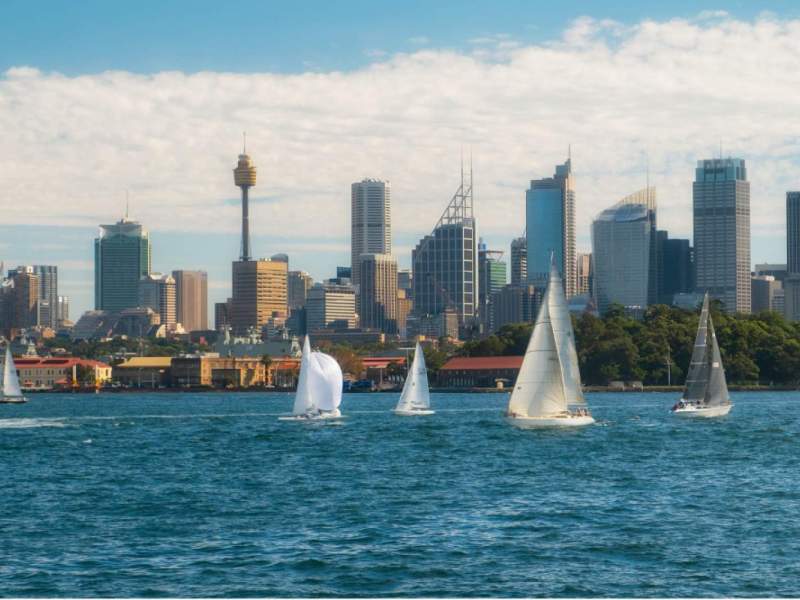
Sydney Harbour is the benchmark most other Australian sailing grounds get compared to, and it largely lives up to it. The harbour offers over 240 kilometres of shoreline once you count every bay and inlet, with landmarks like the Opera House and Harbour Bridge providing a backdrop few sailors tire of. The Bridge itself clears more than 30 metres, so even tall-rigged yachts can pass beneath it at any state of tide.
Visiting sailors are well catered for. Roads and Maritime Services maintains free public mooring buoys throughout the harbour on a first-come, 24-hour basis, and several marinas offer free short-stay Destination Berths for water, fuel or a supermarket run. Middle Harbour Yacht Club, Royal Sydney Yacht Squadron, Cruising Yacht Club of Australia (home of the Sydney to Hobart) and Royal Prince Alfred Yacht Club in Pittwater are among the clubs that welcome visiting crews, and most run regular twilight races that are an easy way to meet the local fleet and pick up a berth as crew.
The harbour is deep, often 15 to 25 metres in the main channels, so anchoring means picking your spot carefully in one of the many coves rather than simply dropping the hook wherever you like. Ferries and commercial shipping have right of way, and a 15-knot speed limit applies near the Harbour Bridge. Outside the harbour, the Tasman Sea delivers reliable nor'-easterly sea breezes through summer, making Sydney a comfortable base for day sailing as well as the launch point for the Sydney to Hobart each Boxing Day.
Brisbane, Queensland
Brisbane's sailing grounds centre on Moreton Bay, a large, shallow, sub-tropical bay bounded by Moreton and North Stradbroke Islands. It's a cruising ground that rewards patience with the tide table: much of the bay is a maze of sandbanks and shifting channels, and there's a standing local joke that Brisbane sailors fall into two camps, those who've run aground in the bay and those who haven't done it yet.
Manly, on the bay's western shore about 19 kilometres from the CBD, is the main yachting base and home to the Royal Queensland Yacht Squadron, Wynnum Manly Yacht Club and the Moreton Bay Trailer Boat Club ( a marina that, despite the name, comfortably takes yachts up to 24 metres). The Brisbane River itself is a mandated port of entry for cruising yachts arriving from overseas, with Rivergate Marina the designated clearance point, though the river's tidal flow of up to three knots and its lower bridges limit how far upstream a masted yacht can comfortably go.
Once through the bay's shifting shallows, the cruising is rewarding: Moreton and North Stradbroke Islands offer clear water and quiet anchorages, and the passage south toward the Gold Coast is a popular multi-day cruise. Queensland does not observe daylight saving, so factor that into any passage planning with interstate crews. Weather is sub-tropical, meaning reliable sunshine but a real chance of sudden, heavy summer downpours.
Melbourne, Victoria
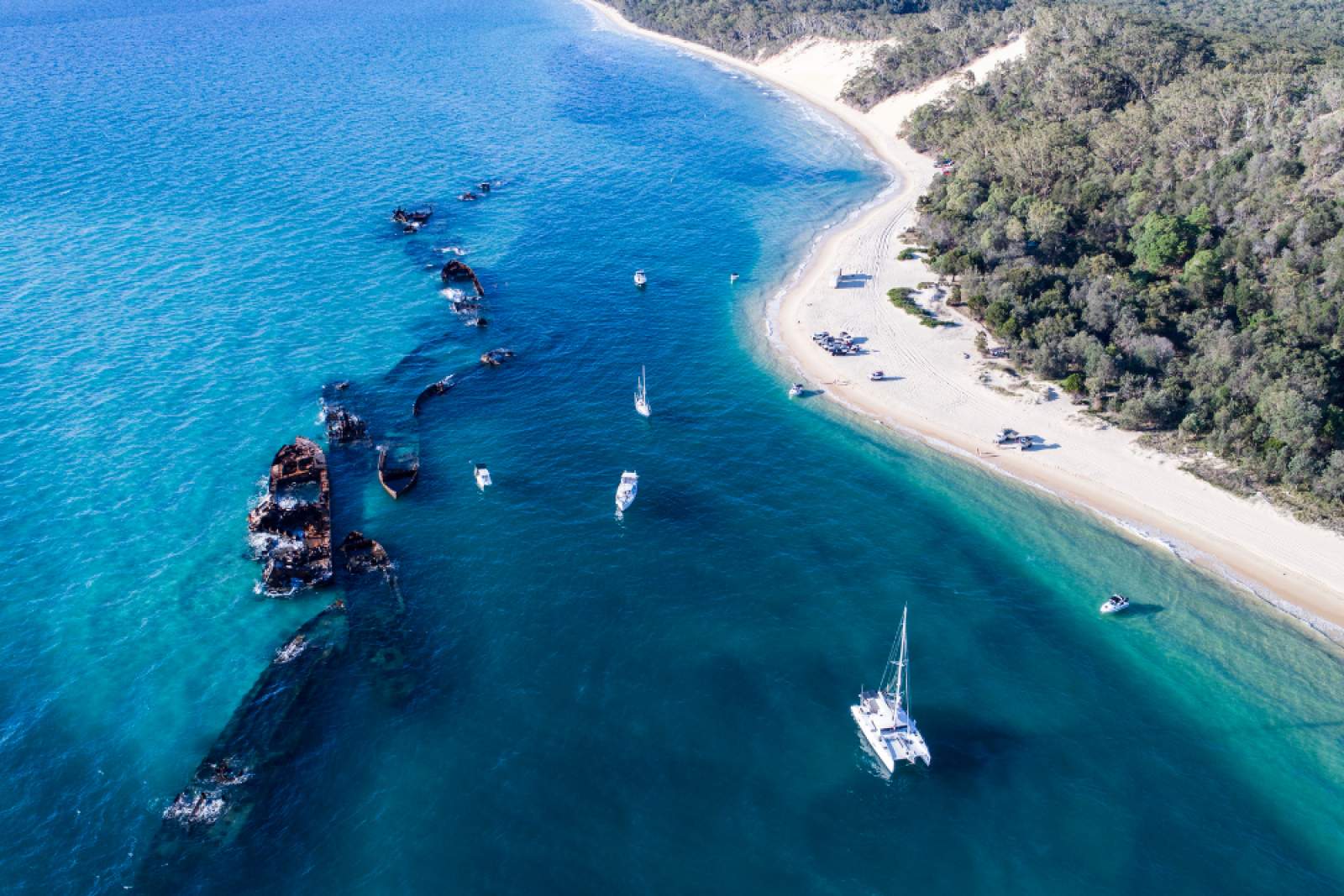
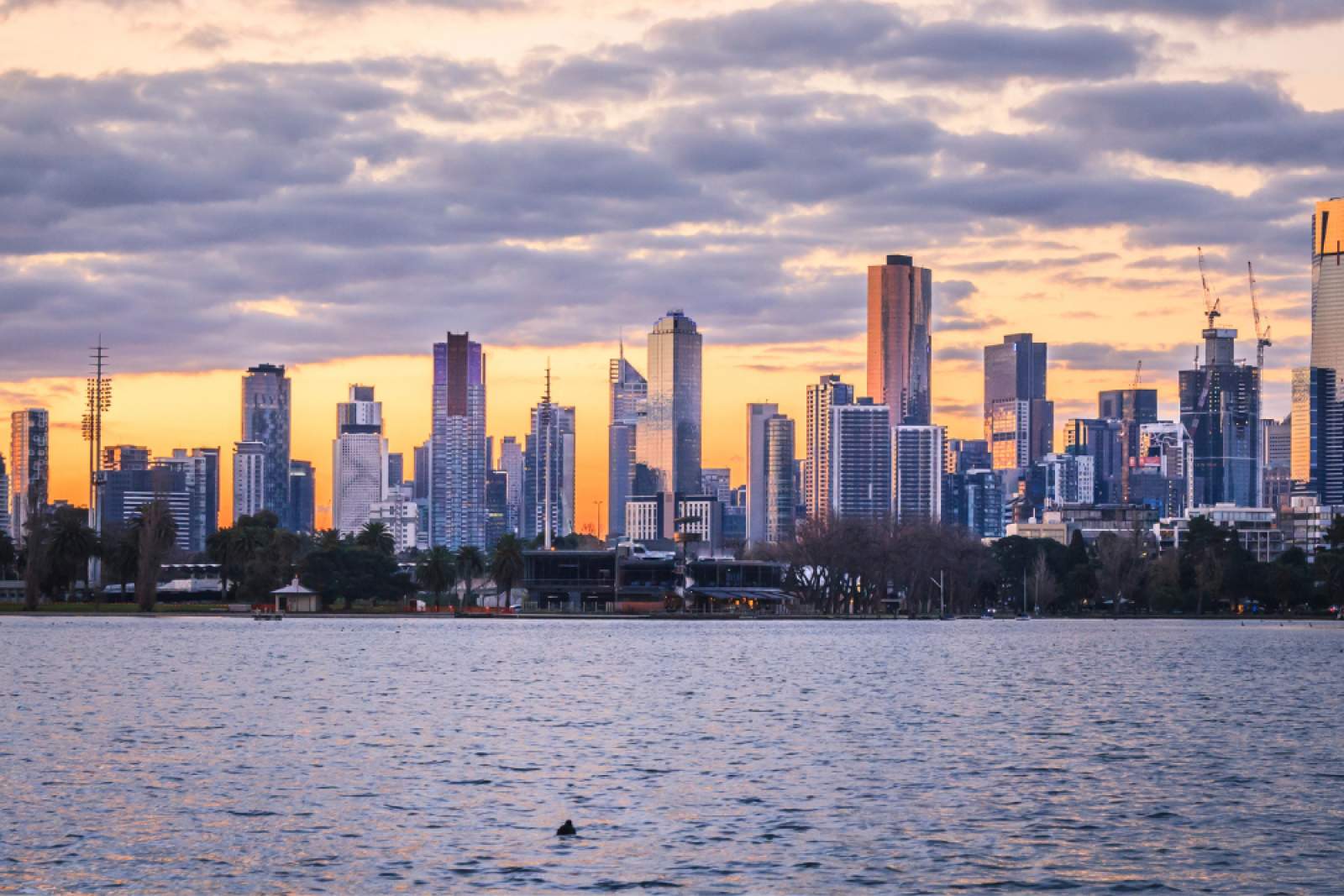
Melbourne sails on Port Phillip, a large, mostly shallow bay ringed by long-established yacht clubs, from Royal Yacht Club of Victoria and Royal Melbourne Yacht Squadron near the city, down through Sandringham, Brighton and Blairgowrie to Mornington. The bay itself is generally forgiving, though a strong southerly blowing up from the Southern Ocean can raise a short, choppy sea in a hurry.
The feature every visiting sailor needs to plan around is the entrance, known simply as The Rip, where tidal streams can run past six knots and the sea can break heavily in wind-against-tide conditions. Local advice is to time an arrival for slack water, roughly three hours either side of high or low tide at Port Phillip Heads. Once inside, the bay is well served by yacht clubs happy to take a visiting keel for a night, and cruising guides generally steer visitors away from the Yarra River marinas in favour of a swing mooring or a berth at one of the bayside clubs, which tend to offer better value.
Prevailing winds along Victoria's coast are south-westerly year-round, with northerlies more common in summer. Melbourne's sailing season runs roughly October to May, and the bay hosts a busy club racing calendar throughout, with classes ranging from off-the-beach skiffs and catamarans to the keelboat fleets based at the bigger clubs.
Hobart, Tasmania
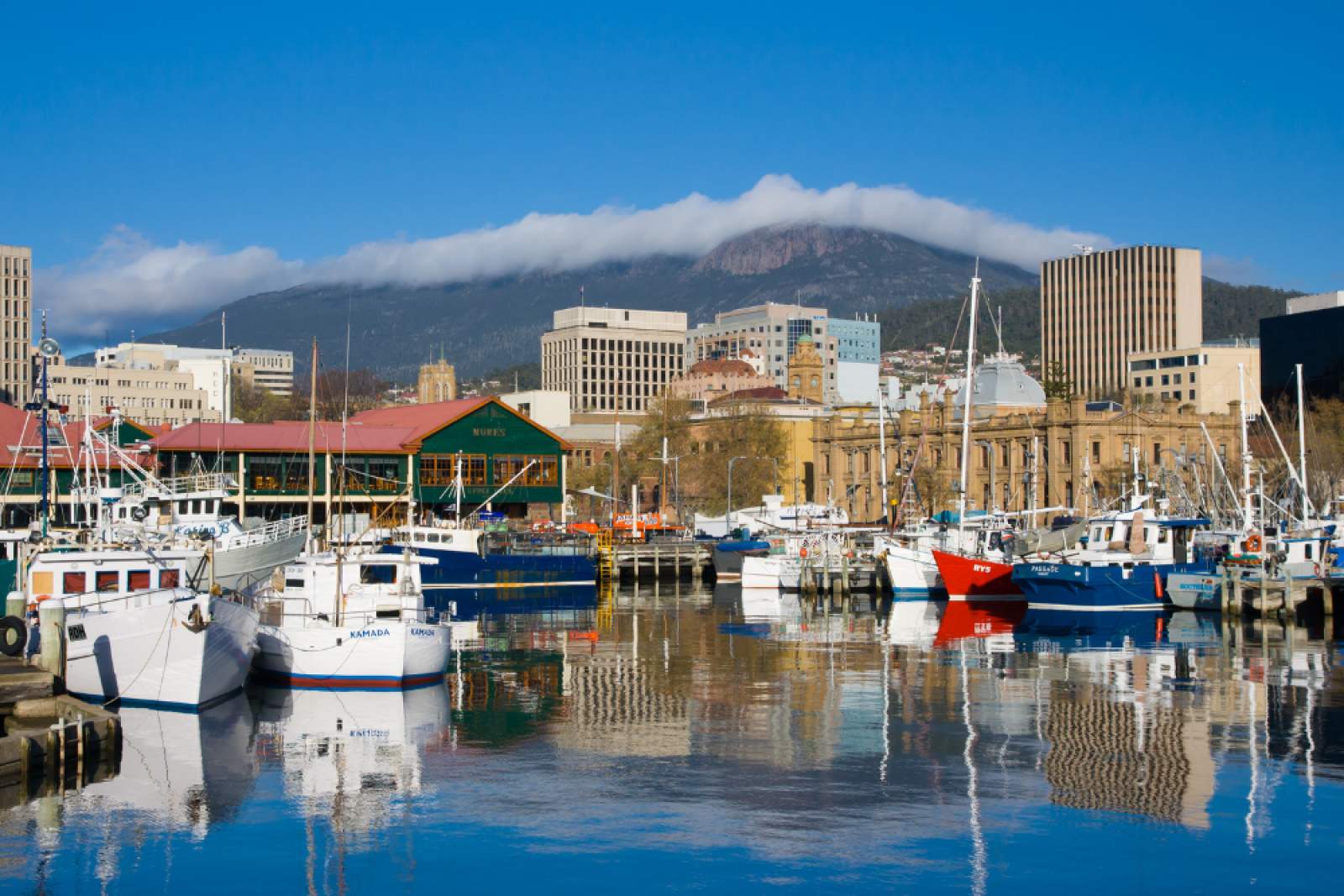
Hobart is where Australia's best-known ocean race ends, and the River Derwent still carries that pedigree in every clubhouse conversation. The Royal Yacht Club of Tasmania, based in Sandy Bay a short walk from the city centre, has served as the finishing club for the Sydney to Hobart since the race began in 1945, and its 120 to 210-berth marina (reports vary slightly by season) sits directly on the river beneath Mount Wellington.
The Derwent Sailing Squadron, also in Sandy Bay, runs one of the busiest racing programs in the state, with well over a hundred races scheduled most years and weekly Thursday twilight sailing through summer that's an easy, welcoming way for a visiting sailor to get afloat. Beyond the river itself, Storm Bay and the passage past the Organ Pipes and Tasman Island toward Cape Raoul offer serious, southern-latitude sailing for anyone keen to push further.
Conditions here are a genuine step up from the mainland capitals: cooler water, a real chance of rapid wind shifts, and a proximity to the Southern Ocean and Bass Strait that even experienced sailors treat with respect. Hobart's own Sydney to Hobart week, over the New Year period, turns the Derwent waterfront into a festival atmosphere, with finishing yachts sailing past crowds gathered at Constitution Dock and Battery Point.
Adelaide, South Australia
Adelaide sails on Gulf St Vincent, and the character of the sailing here is a little different from the eastern capitals: rather than a sheltered harbour, it's closer to an open roadstead lined with beaches and jetties. North Haven, about 30 minutes from the CBD, is the hub of the scene and home to the Cruising Yacht Club of South Australia, alongside the Royal South Australian Yacht Squadron at Outer Harbour and several other marinas around the Port River.
Because the metropolitan coastline lacks the deep, enclosed bays of Sydney or Melbourne, visiting yachts generally head for a marina berth rather than a casual anchorage, and it's worth calling ahead. The popular weekend cruising destination is across the gulf on Yorke Peninsula, where Port Vincent Marina offers the region's most reliable all-weather stop, with Edithburgh and Troubridge Island further south as options in settled weather.
Adelaide's sailing calendar leans heavily on club racing and youth development, and the Adelaide Sailing Club at West Beach has hosted multiple world and national junior and youth championships on the gulf. Day sailing close to the city is straightforward and often shares the water with dolphins, but anyone heading further afield should keep a close eye on the forecast, as the gulf offers little shelter once a westerly sets in.
Perth, Western Australia
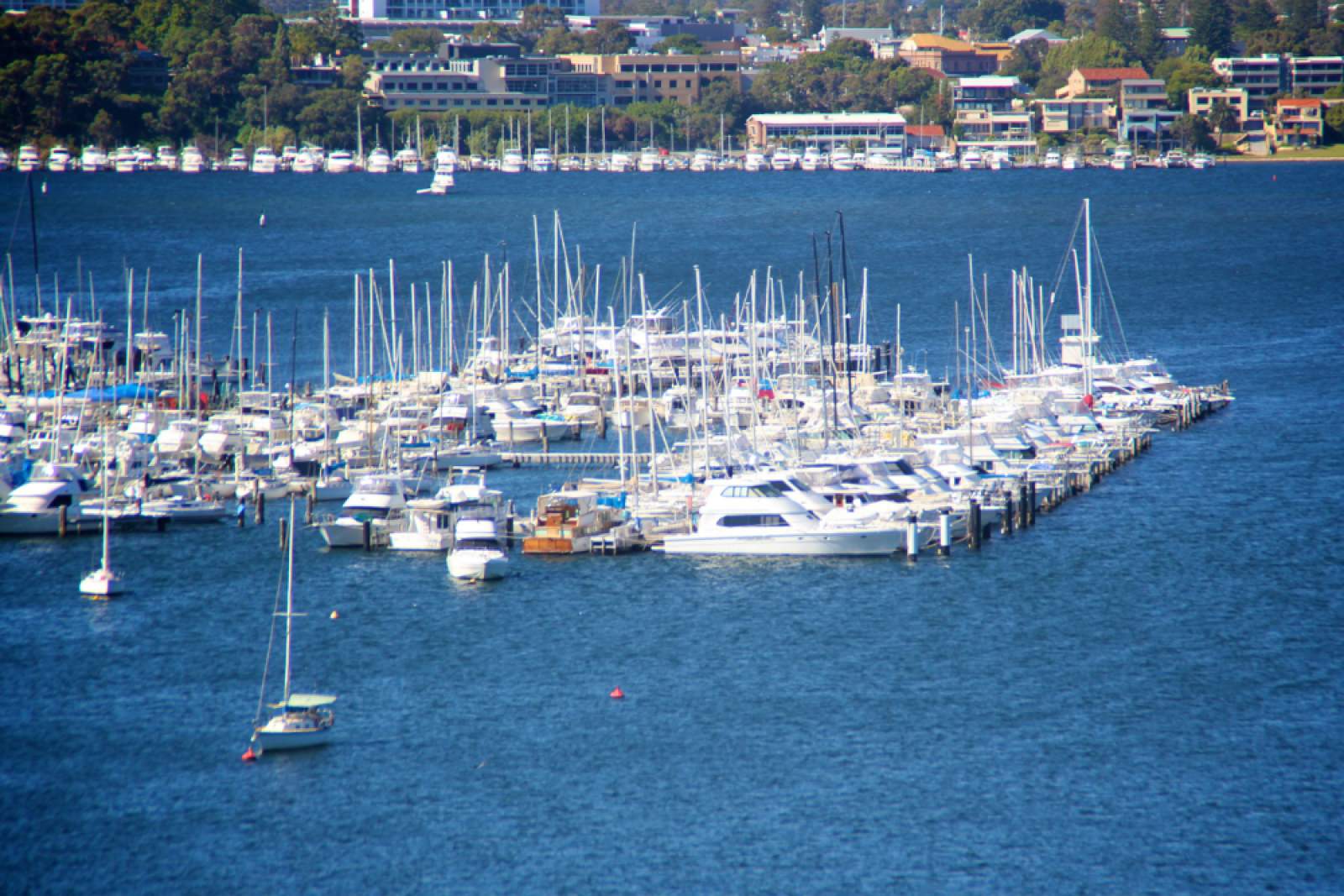
Perth sailing happens on two very different bodies of water: the Swan River, which winds gently through the city and its riverside yacht clubs, and the Indian Ocean off Fremantle, where the sailing gets serious. The river is home to clubs like East Fremantle Yacht Club, Claremont Yacht Club and Nedlands Yacht Club, all offering sheltered, family-friendly sailing close to the CBD.
Fremantle itself is where the city's ocean racing culture lives, anchored by the Fremantle Sailing Club, one of the largest ocean sailing clubs in the country with more than 3,500 members. The defining feature of sailing here is the Fremantle Doctor, an afternoon sea breeze that builds reliably through summer afternoons and can reach 20 knots or more by late afternoon. It's strong enough that it shaped yacht design during Fremantle's stint hosting the 1987 America's Cup, and it remains the reason local racing calendars are built around a lunchtime start.
Sailing south of Fremantle toward Cape Leeuwin, anchorages become scarce and the prevailing south-easterlies off the Indian Ocean High demand more planning, so most visiting cruisers treat Fremantle itself, rather than the coast beyond it, as the main event. Summers are hot, with the Doctor providing welcome relief once it fills in each afternoon.
Darwin, Northern Territory
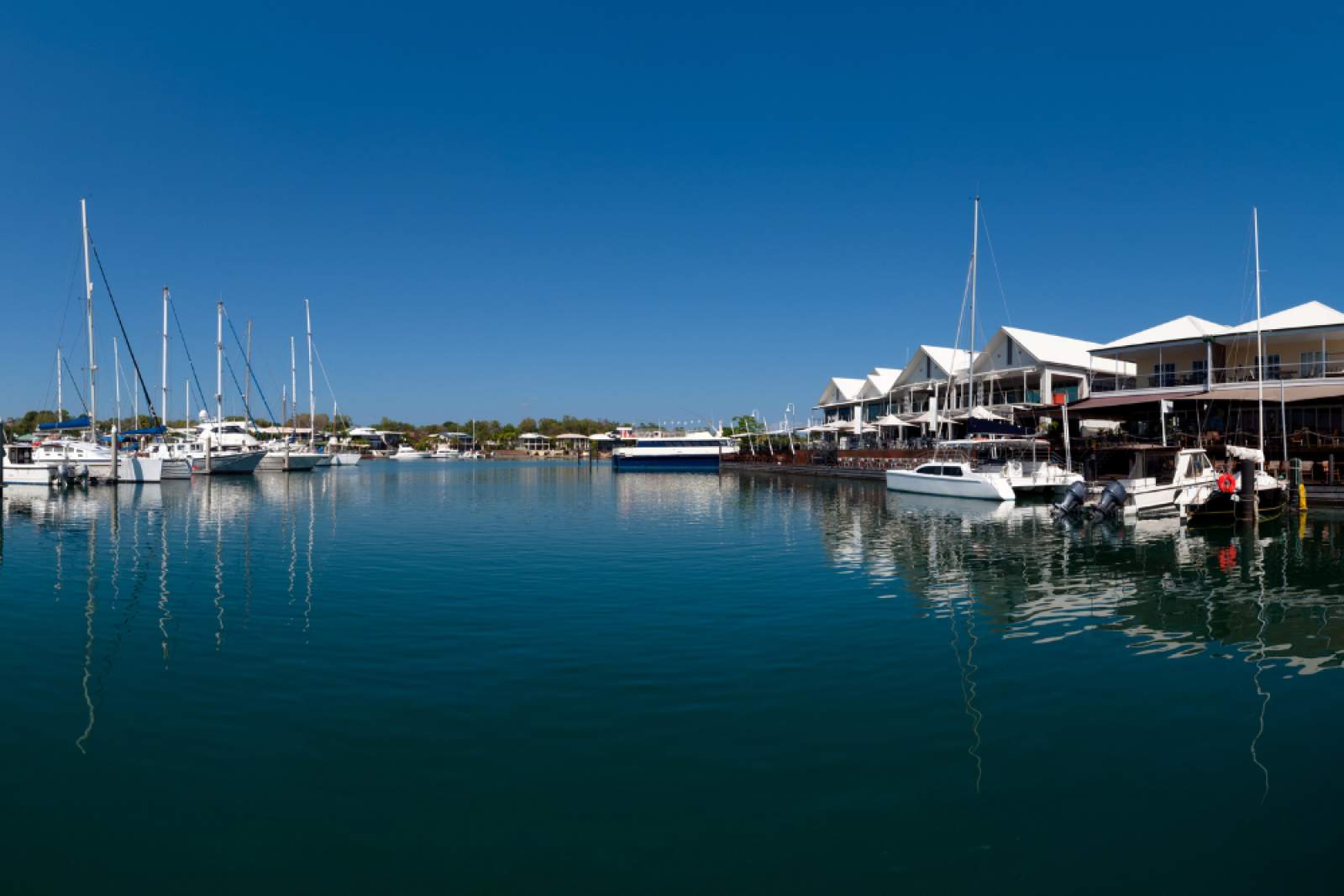
Darwin is the outlier on this list, and sailors either love it or find it a little confronting. Darwin Harbour has one of the largest tidal ranges in the country, with some marina locks seeing a rise and fall of up to five metres, and the main visitor anchorage in Fannie Bay can leave a dinghy stranded well up the beach at low water. The Darwin Sailing Club, right on Fannie Bay, is the obvious first stop for a visiting sailor, offering temporary membership, showers, laundry and a waterfront bistro with a fair claim to the best sunset view of any yacht club in the country.
Because of the tidal range, Darwin's marinas (Cullen Bay, Tipperary Waters, Bayview and the Frances Bay basin, known locally as the Duck Pond) are all entered through locks, each with its own dimensions, VHF channel and lockmaster, and berths need to be arranged in advance. The sailing season here effectively runs in reverse to the southern capitals: the dry season, roughly May to October, is when the anchorage fills with local and visiting boats, while the wet season brings monsoon weather that sends most yachts into the sheltered creek marinas.
Darwin also sits at the start of well-travelled offshore routes north, including the Darwin to Ambon race and the Sail Indonesia rally, both of which see a spike in visiting cruisers each July and August. Anyone planning to sail here should build in plenty of slack for tide-dependent lock access, and keep a healthy respect for the crocodiles that rule out a casual swim off the back of the boat.
Ready to Explore Interstate?
However you're planning to make the trip, whether that's delivering a yacht up the coast, chartering locally while you're in town, or finally taking the leap into buying your own boat before setting off, a look through the current listings on Boats Online is a good place to start working out what's within reach. Fair winds, and see you on the water.
Frequently Asked Questions
Which Australian capital is easiest for a first-time interstate sailor to visit?
Sydney is generally the most forgiving introduction. The harbour is deep, well marked, well served by free public moorings and Destination Berths, and close enough to open water that you can get a proper sail in without venturing offshore. Melbourne's Port Phillip is a close second, provided you plan your entry through The Rip around slack water.
Do I need different charts, licences or safety gear for each state?
You'll need up-to-date charts for each region you sail, since local hazards (Moreton Bay's sandbanks and Darwin's tidal range are two good examples) vary enormously between states. On licensing, a current licence from your home state is generally recognised elsewhere in Australia under mutual recognition arrangements, though the details differ: Western Australia caps interstate recognition at three months before you need a local RST, while Queensland and Victoria recognise an interstate licence for as long as it stays current. The Northern Territory doesn't require a licence at all, and South Australia's licensing net is the broadest of any state. See the Licence Requirements section above for the full state-by-state breakdown. Safety equipment requirements are broadly aligned nationally for offshore passages, but always confirm current rules with the state marine authority before you depart.
What's the best time of year to sail into Hobart or Darwin?
Hobart's sailing season runs roughly October through April, with the Sydney to Hobart finish over the New Year period bringing the biggest fleet and the best atmosphere on the Derwent. Darwin runs on the opposite calendar: the dry season, from around May to October, is the time to be there, since the wet season brings monsoon conditions and pushes most yachts into locked marinas for the cyclone season.
Can a visiting yacht always get a berth at a local yacht club?
Not always, and it pays to call ahead rather than assume. Sydney and Melbourne both have a good spread of visitor moorings and Destination Berths, but clubs in smaller markets, or during major regattas and races, can fill up quickly. Darwin is the trickiest of the seven, since every marina is entered through a tide-dependent lock and berths generally need to be booked in advance.
Which capital has the most reliable wind for sailing?
Perth's Fremantle Doctor is about as reliable as sailing wind gets in Australia, building through the afternoon on all but the calmest summer days. Sydney and Brisbane both enjoy consistent sea breezes through the warmer months, while Adelaide and Hobart are more changeable and reward sailors who check the forecast closely before heading out.